Mobility
Observe how comfortably you change position, reach, turn, and settle. Use a wall, chair, or open floor according to the space available.
Explore practical notes on walking, posture, mobility, pacing, and the spaces that invite a person to move with more awareness.

Movement can happen while commuting, carrying groceries, tending plants, taking stairs, changing position at a desk, or meeting a friend outdoors. Looking at these moments broadens the conversation without suggesting that one formal routine suits every person. The useful question is often not how much someone can do, but which changes make ordinary movement easier to notice and repeat.
Observe how comfortably you change position, reach, turn, and settle. Use a wall, chair, or open floor according to the space available.
Alternate periods of attention with ordinary pauses. A slower pace can help you notice the route, the surface, and the people around you.
Shade, stairs, traffic, flooring, and furniture all influence how movement is experienced. Design the setting before demanding more from yourself.
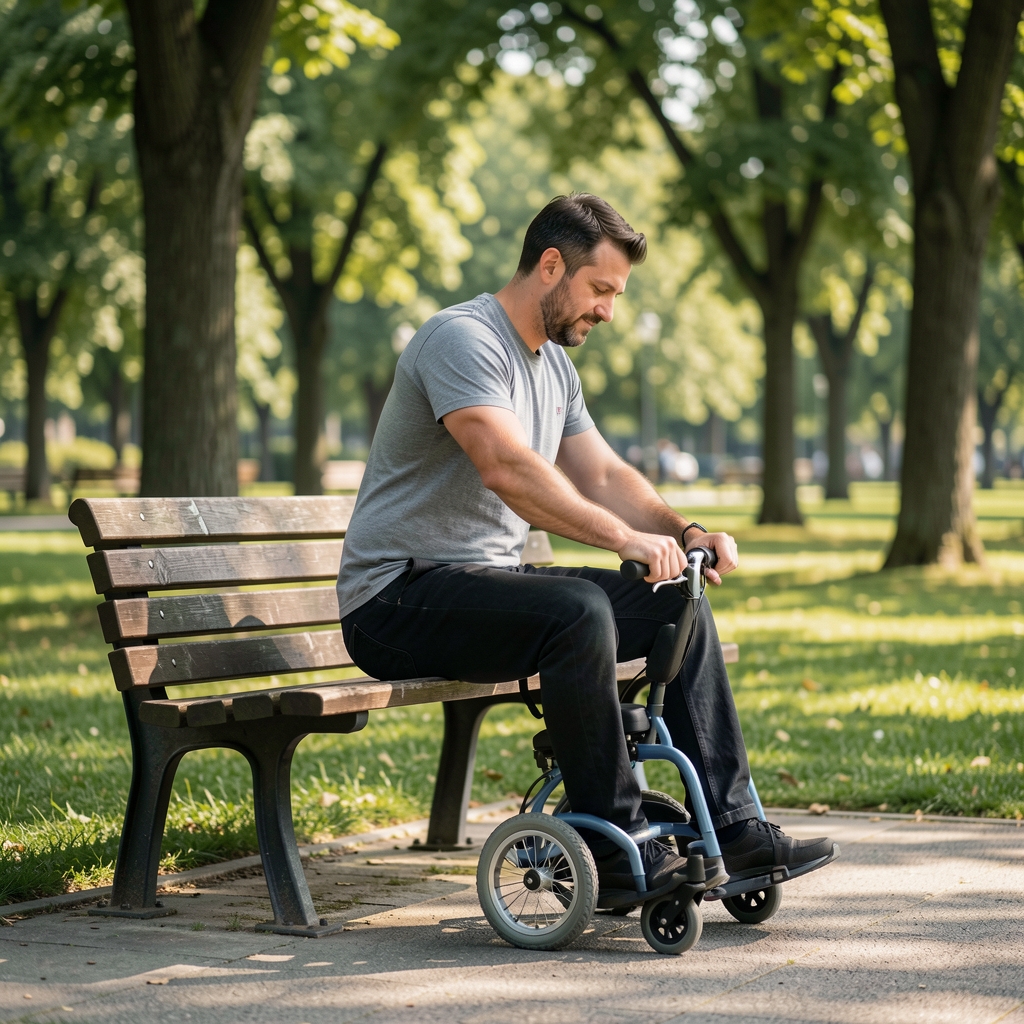
A familiar route offers useful information. Where do you naturally slow down? Which corner is shaded? Where can you stand without blocking others? These questions turn movement into observation rather than a performance.
| Route feature | What it offers | What to check |
|---|---|---|
| Shade | More comfortable time outdoors | Whether shade remains available at the chosen hour |
| Seating | A visible place to pause | Surface, privacy, and whether it blocks circulation |
| Mixed surfaces | Variation in pace and attention | Lighting, rain, and loose or uneven areas |
| Quiet stretch | Room for conversation | Safe crossing points and nearby activity |
“A route teaches you what a plan cannot: where attention naturally returns.”— Veneran movement desk
No. Many observations begin with walking, standing, changing position, or using stable features already present in a home or public space.
Consider a cooler time, shade, water, shorter distance, and a nearby place to pause. Climate is part of planning, not an inconvenience to ignore.
Yes. A shared walk or conversation can make the route more interesting, provided that pace and participation remain flexible.
Movement changes with weather, clothing, transport, work, and the surfaces available in a particular place. An adaptable practice keeps the observation while changing the route or duration. This is especially relevant in a tropical climate, where heat, rain, and shade can alter the most comfortable time to be outdoors.
Use the information on this page as a way to plan and notice, not as a substitute for individual guidance. If a personal concern needs assessment, choose an appropriately qualified local professional. For ordinary daily activity, begin with clear surroundings, an easy pace, and permission to stop or change direction.
“The most sustainable route is often the one that leaves enough attention for the world around it.”— Veneran movement notes