Clear invitations
Describe the duration, location, surfaces, clothing expectations, and what someone can do if they need a pause. Plain information reduces uncertainty before the first meeting.
Veneran examines how shared spaces, considerate invitations, and flexible routines can make movement and rest easier to include in ordinary community life across Indonesia.

Community activity is shaped by more than a calendar entry. Meeting points, shade, lighting, water, seating, pace, and the wording of an invitation all influence whether a person feels able to arrive and remain. A useful gathering leaves room for different energy levels and different reasons for attending. It does not require everyone to move in the same way or at the same speed.
Describe the duration, location, surfaces, clothing expectations, and what someone can do if they need a pause. Plain information reduces uncertainty before the first meeting.
Offer a shorter route, a seated option, and a visible meeting point. These choices help a group remain together without making participation feel like a test.
Rotate small responsibilities such as bringing water, checking the route, welcoming newcomers, or recording the next date. Participation grows when it is not carried by one person.
In BSD City, a short walk may pass through a busy road, a shaded lane, a retail frontage, or a quiet park edge. Each setting creates a different conversation and requires different planning. The most considerate organisers observe the route in advance, identify rest points, and communicate changes without making people feel at fault for choosing another option.
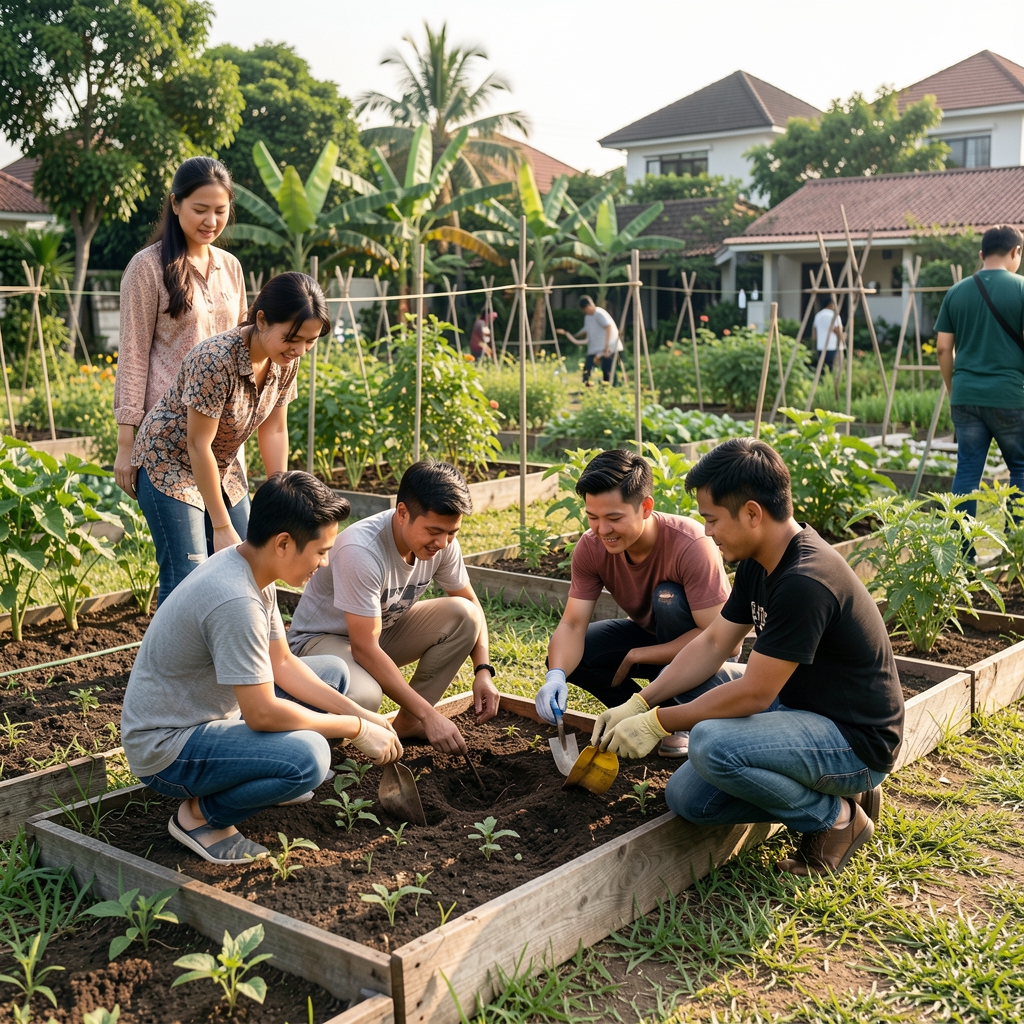
Community routines can include walking, gentle stretching, gardening, reading circles, or a shared meal. The important feature is not a particular format; it is the attention given to belonging, consent, practical information, and the dignity of different capacities.
See the events calendar| Moment | Practical question | Simple preparation |
|---|---|---|
| Before | Can a first-time visitor find the place? | Share a map note, landmark, start time, and contact number. |
| Arrival | Is there a calm way to join? | Name a greeter and explain the pace without pressure. |
| During | Can people pause or leave comfortably? | Mark shade, seating, water, and a shorter return route. |
| After | How will the group learn? | Invite factual feedback and record one improvement for next time. |
“A welcoming activity does not ask people to hide the realities of their day; it plans with those realities in view.”— Veneran community desk
Start with one repeatable format, such as a twenty-minute walking conversation or a monthly shaded gathering. Keep the description factual, make attendance optional, and provide a clear way to ask questions. Veneran welcomes thoughtful local examples that show how a routine was organised without presenting one group’s experience as a universal model.
Share a community noteAfter a gathering, ask whether the invitation matched the actual experience. Did the meeting point look like the description? Could a newcomer understand the pace? Was there a respectful way to decline photographs or leave early? These questions are practical measures of care because they examine the design of participation rather than the personality of participants.
A community format can also change with the season. Rain, heat, school schedules, religious observance, traffic, and public-space maintenance all affect attendance. Recording these factors prevents a small change from being interpreted as a lack of interest. It also helps future hosts plan with more accuracy.
“The smallest detail that removes uncertainty may be the detail that lets someone join.”— Veneran field note